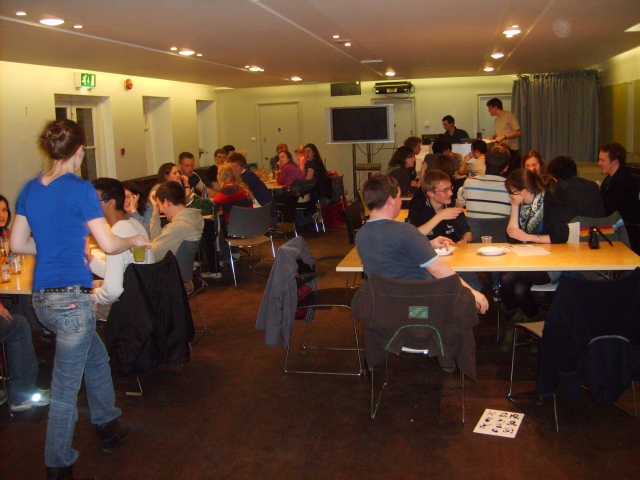
- Danby x Whitby Epidemiological Case Study Workshop by Dr Charlotte HammerDate and Time: 28th August, 19.00-21.00 Location: Howard Building Assembly Room You’re an epidemiologist who’s arrived at a refugee camp where there’s been an increase in disease incidence among the […]
- Dr Celine YeungDate and Time: 9th March, 18.00-19.00 Location: online Sustainable chemical synthesis: Photoelectrochemical fuel synthesis using organic semiconductors with (bio)molecular catalysts Dr Celine Yeung is a recent Downing alumnus, having completed […]
Who was Danby?
Thomas William Danby was born to Thomas Danby Sr and grew up in Middlesex (now part of London)1. Danby Sr. was the only one of his siblings to move South for work; the rest of the family remained in Yorkshire, mostly farming (though one daring nonconformist married a chocolate maker, slightly further afield in Hull)1. Danby Sr. operated a prosperous wholesale grocery business in Whitechapel1. This allowed Danby to be educated in Edgware House2 (a small private boys’ boarding school3), then in Bruges2, and finally at the Royal School of Mines2 (where he studied geology4), before coming to Cambridge.
In stark contrast to Downing’s loyalty to Danby, Danby showed little loyalty to Downing. He matriculated in Michaelmas 1860 at Caius, then migrated to Queens’ in January 1862, before finally settling on Downing in June 18622. In his finals in 1864 he topped tripos5, which catapulted him to stardom (he’s practically a household name…). In 1867 Downing elected Danby to a Fellowship in recognition of his academic achievement. This was a big deal: this made him the first ever NatSci to become a Fellow, university-wide6. It seems slightly less impressive given the context that the Natural Sciences Tripos was only introduced in 1851.
Nevertheless, Danby’s appointment was widely regarded as a significant milestone in the incorporation of science teaching at the university. Until the mid 1800s, examinations covered either classics or mathematics, with the primary function of teaching and examination being “the training of men for the Anglican clergy”6. This was quickly becoming an issue, as the new middle class – of which Danby was representative1 – was growing in economic and political power. A Fellow at Merton commented, in the same year that Danby became a Fellow, that “the predominantly classical nature of the studies” was responsible for the failure to attract students from the emerging “commercial and mercantile class”6. Hence new triposes, including the NST, were created to curb the erosion of the university’s influence over society at large.
Science disrupted many aspects of the status quo beyond the rigid adherence to classics and mathematics. Perhaps most importantly, it was pivotal in redefining teaching as a lifelong academic career as opposed to a “rung on the ecclesiastical ladder”6. Between 1850 and 1899, only 12% of NST graduates became clergymen compared to 38% of Cambridge graduates overall6. This was likely driven by the requirement of extensive specialist knowledge required to teach science, that makes it ill-suited as a temporary occupation. (Teachers employed by individual colleges were at this time far more useful to exam preparation than actual professors, whose endowments unhelpfully restricted them to lecturing on select topics, which over time diverged from syllabi7). Furthermore, science contributed to a power shift away from individual colleges to the central University, as it was impractical for colleges to each provide separate provision (e.g. labs, specialist technicians). Remaining pertinent today, the new NST had, by the end of the 19th century, successfully attracted a much more representative demographic than the university at large. While certain social groups remained almost entirely unrepresented, e.g. farmers, the intake contained a much higher proportion of men whose fathers were in industry, commerce, or medicine6. Therefore, the election of Danby as the university’s first science Fellow is of great significance.
There was at the time still much resistance to the departure from tradition. The rich colleges were opposed to providing financial contribution towards the newly proposed centralised teaching provision. Yet, teaching provision in science was sorely needed, so they sourced their own. Trinity didn’t hesitate for a moment to exploit Danby’s unfaithful nature: Danby was appointed as a college lecturer in physical sciences, the same year he became a Fellow at Downing8.
In addition, science as a discipline lacked respectability, especially among the upper class. A quote from the 1840s describes conventional wisdom being that “should a father observe in his gifted son a tendency to physical philosophy, he anxiously endeavours to dissuade him from the career … it will have the inevitable effect of lowering his position in what is called, and justly called, good society”. This attitude persisted; Danby had fans and critics in equal measures. In response to Danby’s fellowship in 1867, an editorial in the Lancet observed that:
“No wonder that the numbers who go in for the examination are few; no wonder that they do not show equal merit with the candidates for the other triposes if it be so. The wonder is that the Tripos keeps on its legs at all, and that any good men are found to devote themselves to natural science. Those who seek reward as well as honour, and they constitute the mass of hard-working students, see that the path of Natural Science will lead to little or nothing, and turn in the better-paid ways of Classics or Mathematics.”
Quoted in ‘The Cambridge Chronicle’, 9th November 1967
There is little evidence of Danby doing anything particularly important at Downing after becoming a Fellow, beyond giving geology lectures9. He was perhaps busy teaching at Trinity8. Danby was also recorded as being a chemistry demonstrator5, but whether or not this is commendable is subjective. Danby remained undecided about what he wanted to do after graduating, which he cannot be faulted for. He was admitted to Middle Temple, one of 4 professional societies in London responsible for training and admitting barristers, in the year he graduated (1864)2. However, he never pursued a law career. He lectured at Trinity until 18698. In 1868 he translated and edited “A Practical Guide to the Determination of Minerals by the Blowpipe”10. This was originally published by Robert Fuchs, who tutored him at the Royal School of Mines. Pages 18-19, shown below, describe the flame tests taught in GCSE and A level chemistry.


The majority of Danby’s career was spent focused on teaching in schools1. Again, this was representative of a wider shift taking place at the time. NST graduates often went on to teach in schools, delivering a “striking improvement in the quantity, quality and backgrounds of science teachers” from 18506. This helped break a cycle of poor recruitment to the NST tripos, both in terms of numbers and quality, and poor outcomes. Danby eventually became the chief inspector of schools in South East England1, taking a keen interest in quality of provision across all subjects.
[1] https://www.familysearch.org/en/tree/person/details/MMX4-7ZN census data about T. W. Danby and his family (free but requires an account)
- His father’s siblings spent most of their lives in Yorkshire, mostly farming
- Danby Sr. operated a wholesale grocery business which at one time employed 4 people, and was successful enough for him to retire a ‘merchant’
- John Hunt married Mary Danby (sister of Danby Sr.). The 1830 census records him as a chocolate maker.
- Danby was representative of the new commercial and mercantile middle class – his father was described in the 1871 census as a “retired merchant”
[2] https://venn.lib.cam.ac.uk/ Alumni Database (requires Cam login)
- Danby was educated in Edgware House, then in Bruges, then the Royal School of Mines
- Danby matriculated in Michaelmas 1860 at Caius, then migrated to Queens’ in January 1866, before finally settling on Downing in June 1862.
- He was admitted to Middle Temple on April 13th 1864, ages 24, as ‘only son of Thomas, trader, of 30, Addison Road’
[3] https://www.british-history.ac.uk/vch/middx/vol5/pp125-126 Edgware House was a private boys’ school at the time
[4] https://archive.org/stream/b24855595/b24855595_djvu.txt Danby studied Geology at the Royal School of Mines 1857-1860
[5] https://www.jstor.org/stable/25206052?utm BMJ article
- Danby topped tripos in 1864
- Danby was appointed Superintendent of the Chemical Laboratory, and Lecturer in Geology and Mineralogy at Downing in 1866
[6] https://www.jstor.org/stable/1050376?utm Roderick MacLeod, “The ‘Naturals’ and Victorian Cambridge”
- Danby was the first ever NatSci to become a fellow, university-wide
- Until the mid 1800s, examinations covered either classics or mathematics, with the primary function of teaching and examination being “the training of men for the Anglican clergy”
- Between 1850 and 1899, only 12% of NST graduates became clergymen compared to 38% of Cambridge graduates overall.
- A Fellow at Merton commented, in the same year that Danby became a Fellow, that “the predominantly classical nature of the studies” was responsible for the failure to attract students from the emerging “commercial and mercantile class”.
- A quote from the 1840s describes conventional wisdom being that “should a father observe in his gifted son a tendency to physical philosophy, he anxiously endeavours to dissuade him from the career … it will have the inevitable effect of lowering his position in what is called, and justly called, good society”.
[7] Isobel Falconer, ‘Building the Cavendish and time at Cambridge’, in Raymond Flood, Mark McCartney and Andrew Whitaker (eds) James Clerk Maxwell: Perspectives on his Life and Work (Oxford University Press, 2014) https://isobelf.wordpress.com/wp-content/uploads/2015/06/falconer_maxwellpreprint2013.pdf?utm
- (pg 4) Teachers employed by individual colleges were at this time far more useful to exam preparation than actual professors, whose endowments unhelpfully restricted them to lecturing on select topics, which over time diverged from syllabi
[8] https://brittlebooks.library.illinois.edu/brittlebooks_open/Books2009-06/trinco0001admtri/trinco0001admtriv00005/trinco0001admtriv00005_ocr.txt?utm Record of Admissions to Trinity College from 1851-1900
[9] https://www.bmj.com/content/2/515/541.2?utm
- As a fellow at Downing, Danby gave geology lectures
- See also objections to the presence of female midwives – don’t worry, because of their inferior social status rather than their sex – at anatomy lectures!
[10] https://www.scribd.com/document/93427444/Fuchs-Practical-Guide-to-the-Determination-of-Minerals-by-the-Blowpipe-1868 English version of “A Practical Guide to the Determination of Minerals by the Blowpipe” by Robert Fuschs, translated and edited by Danby
[11 Peter Yeandle, Citizenship, Nation, Empire: The Politics of History Teaching in England, 1870–1930, chapter 1, “Enlightened patriotism: or, what was history for?”
- Danby criticises children reading passages aloud verbatim in history lessons, calling this “a picture drawn out of perspective” as it does not demonstrate a conceptual understanding